Female sports nutrition is not just about eating healthy. It is about fueling the female body with the right balance of nutrients to support strength, endurance, hormones, and recovery. For women training in Perth’s warm climate and active lifestyle culture, getting nutrition right can make the difference between steady progress and constant fatigue.
Over the years working with women across Perth, one thing has become clear: many female athletes are under-fueled. They train hard, juggle careers or family, and try to eat “clean,” yet they struggle with low energy, slow recovery, and recurring injuries. That is where structured female sports nutrition becomes essential.
This guide breaks down practical, evidence-based strategies to help you perform at your best.
Table of Contents
ToggleWhy Female Sports Nutrition Is Different
Female athletes have unique physiological needs. Hormonal cycles, iron levels, and body composition goals all influence performance and recovery.
Key differences include:
Fluctuating hormones across the menstrual cycle
Higher risk of iron deficiency
Greater susceptibility to low energy availability
Unique bone health considerations
Increased risk of Relative Energy Deficiency in Sport (RED-S)
According to the Australian Institute of Sport (AIS), proper fueling is critical to prevent performance decline and long-term health issues. You can review general sports nutrition guidance through the Australian Institute of Sport, which provides evidence-based resources for athletes.
In Perth, where outdoor training often happens in heat, hydration and electrolyte balance are also major factors.
The Foundation of Female Sports Nutrition
Effective female sports nutrition starts with three pillars:
Adequate energy intake
Balanced macronutrients
Consistent hydration
When one of these is missing, performance suffers.
1. Energy Availability
Low energy availability happens when training demands exceed calorie intake. Many women unintentionally under-eat.
Signs include:
Persistent fatigue
Loss of menstrual cycle
Frequent injuries
Poor sleep
Mood changes
Fueling adequately is not optional. It is the base of performance.
2. Carbohydrates: The Primary Fuel
Carbohydrates are often reduced in women’s diets, yet they are essential for:
High-intensity training
Endurance sessions
Hormonal balance
Recovery
Active women in Perth training 4–6 days per week often need between 4–7g of carbohydrates per kilogram of body weight daily, depending on training load.
3. Protein for Recovery and Lean Muscle
Protein supports:
Muscle repair
Strength gains
Immune function
Hormonal balance
A general guideline for active women is 1.6–2.2g per kilogram of body weight daily.
Distribute protein evenly across meals:
Breakfast
Lunch
Dinner
Post-training snack
4. Healthy Fats and Hormone Support
Dietary fats are vital for:
Hormone production
Brain function
Vitamin absorption
Include:
Avocado
Nuts and seeds
Olive oil
Oily fish
Restricting fats too much can disrupt hormone balance and recovery.
Micronutrients That Matter for Women
Female sports nutrition must prioritise micronutrients that commonly run low.
Iron
Iron deficiency is common among female athletes.
Symptoms include:
Breathlessness
Low endurance
Pale skin
Headaches
Women in Perth who train intensely or follow plant-based diets should monitor iron levels regularly through blood testing.
Calcium and Vitamin D
Essential for bone strength.
Given Perth’s sunny climate, vitamin D levels are often adequate, but indoor athletes or those training early mornings may still be deficient.
Magnesium
Supports muscle recovery and sleep quality.
Hydration in the Perth Climate
Training in Perth often means heat and humidity.
Hydration tips:
Start sessions well hydrated
Use electrolyte solutions for sessions over 60 minutes
Weigh before and after training to estimate fluid loss
Replace 150% of fluid lost post-session
Even mild dehydration reduces performance.
Female Sports Nutrition and the Menstrual Cycle
Hormones influence energy, strength, and recovery.
Follicular Phase
Higher energy
Greater strength potential
Better tolerance for high intensity
Luteal Phase
Slightly higher resting temperature
Increased carbohydrate needs
Greater fatigue
Adjust training nutrition accordingly. Many women benefit from increasing carbohydrate intake slightly in the luteal phase.
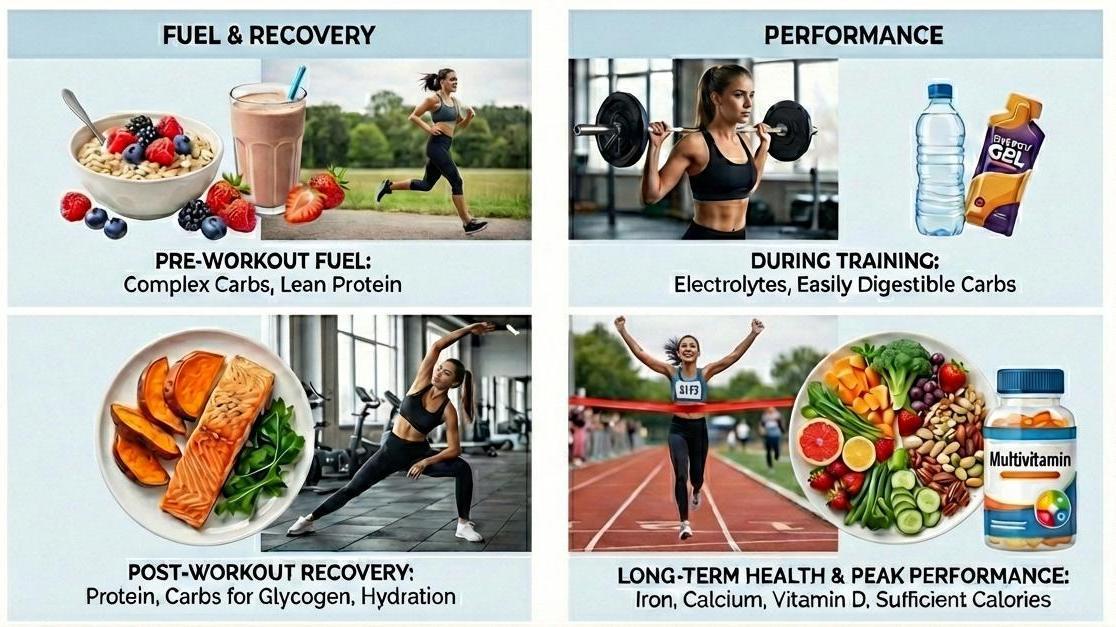
Pre-Training Fuel Checklist
Use this simple table as a guide:
| Training Type | Timing | What to Eat |
|---|---|---|
| Early morning session | 30–60 min before | Banana + yoghurt or small smoothie |
| Strength training | 1–2 hours before | Oats + protein + berries |
| Long endurance | 2–3 hours before | Rice, lean protein, vegetables |
| High-intensity | 60–90 min before | Toast + peanut butter + fruit |
This structured approach makes female sports nutrition practical and consistent.
Post-Training Recovery Formula
Recovery should include:
20–30g protein
Carbohydrates to replenish glycogen
Fluids and electrolytes
Example:
Protein smoothie with banana
Greek yoghurt with berries
Chicken wrap and fruit
Delaying recovery nutrition can extend muscle soreness and reduce next-session performance.
Common Mistakes Female Athletes Make
Skipping breakfast
Underestimating carbohydrate needs
Over-restricting calories
Relying on supplements instead of food
Ignoring iron levels
Female sports nutrition is about fueling enough, not eating less.
Supplements: What Is Worth Considering?
Supplements should support, not replace, whole foods.
Common options:
Protein powder
Creatine monohydrate
Iron (if deficient)
Electrolytes
Omega-3
Creatine is increasingly supported by research for female athletes to improve strength and recovery.
Always consult a qualified professional before supplementing.
Female Sports Nutrition for Different Goals
Fat Loss While Training
Prioritise:
High protein intake
Small calorie deficit
Adequate carbohydrates around training
Avoid aggressive dieting. Performance drops quickly when fuel is too low.
Muscle Gain
Focus on:
Calorie surplus
Progressive overload
Consistent protein distribution
Endurance Performance
Emphasise:
Higher carbohydrate intake
Electrolyte planning
Mid-session fueling strategies
Female Sports Nutrition in Perth: Local Considerations
Perth athletes face unique environmental factors:
Heat stress
Long outdoor training sessions
Coastal wind exposure
High UV levels
Hydration and electrolyte planning become even more important.
Local access to fresh produce is excellent. Use it to your advantage.
Weekly Fuel Planning Checklist
Use this simple checklist:
Meal prep protein sources
Plan carbohydrate portions around training
Monitor hydration daily
Schedule iron checks annually
Track menstrual cycle changes
Consistency builds performance.
Integrating Nutrition With Performance Coaching
Nutrition works best when aligned with training. Structured guidance ensures your fueling matches your workload.
If you are already following a strength or conditioning plan, consider aligning it with tailored support through our sports performance coaching services.
For women seeking targeted support, explore our women’s health specialist services designed specifically for female athletes.
You can also learn more about our full range of programs on our services page.
For personalised support in female sports nutrition, you can explore our dedicated program here: female sports nutrition.
Quick Summary
Female sports nutrition focuses on:
Adequate energy intake
Balanced macronutrients
Iron monitoring
Hydration strategies
Cycle-based fueling
Recovery nutrition
Women athletes in Perth should prioritise carbohydrate availability, protein distribution, iron status, and hydration planning to optimise performance and long-term health.
Final Thoughts: Fuel With Purpose
Performance does not come from training alone. It comes from recovery, energy availability, and strategic fueling.
Female sports nutrition is about respecting the demands you place on your body and giving it the resources to adapt and improve. When nutrition is structured and personalised, performance improves, recovery accelerates, and long-term health is protected.
At MH Performance Coaching, the focus is simple: help women in Perth train stronger, recover faster, and perform with confidence.
If you are ready to improve your results, visit the website MH Performance Coaching and head to the Contact Us page to book your consultation.
You can also call directly on Tel: +61 8 5122 6957 to discuss your goals and build a tailored plan that supports your training, health, and performance.
Your training deserves the right fuel.