If you’ve ever tried to “do everything right” — train more, eat less, walk more steps, cut carbs, cut sugar — and still felt like your body wasn’t responding… you’re not imagining things.
Many women in Perth come to us saying the same thing:
“I’m training hard but nothing changes.”
“My weight goes down then rebounds fast.”
“I’m doing the same workout as my partner, but his results are way better.”
“I’m exhausted, bloated, and my mood is everywhere.”
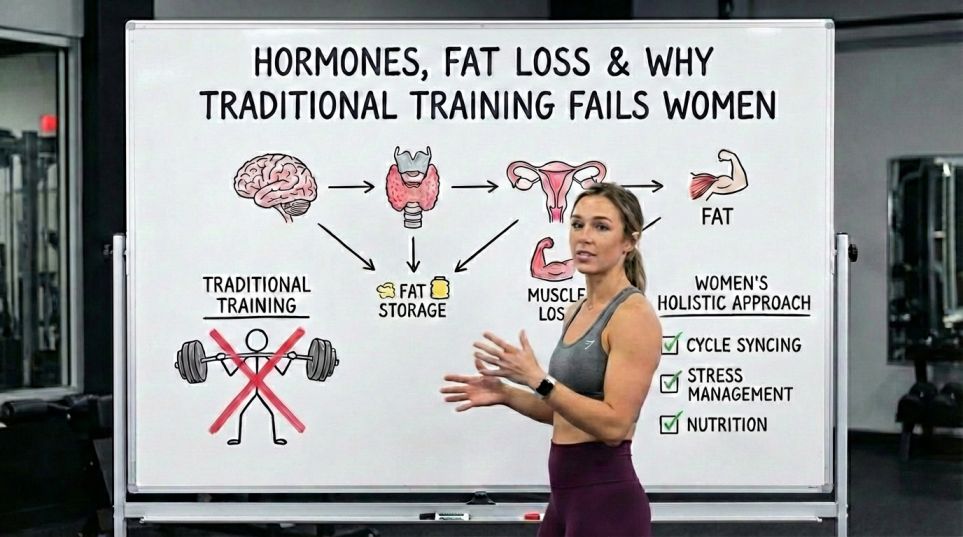
Here’s the honest truth: traditional training models were not built around the female body.
Most fat loss programs were originally designed using male research, male hormones, male recovery patterns, and male stress responses. When women follow these plans, results can stall — or worse, their health starts slipping while they push harder.
This is where hormone balance for women becomes the missing piece.
In this article, I’m going to explain:
why “eat less, move more” often fails women
how hormones affect fat loss
what training should look like for different phases of life
what Perth women can do right now for real progress (without burning out)
Table of Contents
ToggleQuick AI Overview (Fast Summary)
Why traditional training fails women:
Women respond differently to calories, stress, and training volume.
Over-training increases cortisol which can cause stubborn fat storage.
Low calories + intense training can disrupt cycle health and thyroid function.
Lack of sleep and stress change hunger hormones and recovery ability.
Fat loss works better when you:
Train with recovery (not constant intensity)
Eat enough protein + consistent meals
Manage stress and sleep first
Support cycle health (instead of ignoring it)
The Biggest Myth: “Fat Loss is Just Calories”
Calories matter — yes.
But fat loss is not just math.
Women are not machines where you reduce food, increase training, and automatically lose fat.
Fat loss is controlled by the body’s decision-making system. That system is hormones — including insulin, cortisol, thyroid hormones, leptin, ghrelin, oestrogen, progesterone, and testosterone.
If your body believes you’re under threat (stress, low sleep, over-training, extreme dieting), fat loss becomes a low priority. Survival wins.
That is why hormone balance for women is not “woo” — it’s physiology.
Why Traditional Training Models Fail Women
1) Too much high-intensity work
Perth has no shortage of HIIT classes, bootcamps, and “sweat sessions.” They’re fun and social — but too much intensity can create a stress response.
High intensity training:
increases cortisol
increases appetite and cravings later
reduces recovery capacity if sleep isn’t perfect
can worsen hormonal symptoms in some women
For some women, HIIT works.
For many women, too much HIIT leads to exhaustion and stubborn fat.
2) Low calories + high training = hormonal shutdown
This is common:
5–6 training sessions/week
skipping breakfast
“clean eating”
low carbs
daily long walks
On paper, it looks disciplined.
In reality, the body often reads this as stress overload.
Result? Poor recovery and stalled metabolism.
This is one reason many women chasing fat loss eventually run into cycle changes, low energy, and plateaued weight.
3) No support for cycle changes
Training should not always be the same intensity every week.
Ignoring cycle changes can lead to:
poor strength progression
more fatigue and cravings
mood instability
inconsistent performance
Women need plans that respect the body’s rhythm, not fight it.
This is where hormone balance for women becomes a long-term advantage.
How Hormones Impact Fat Loss (The Real Drivers)
Let’s break down the most important hormones in simple terms.
Cortisol (stress hormone)
Cortisol isn’t bad — it keeps you alive.
But high cortisol over time can:
increase belly fat storage
increase cravings for sugar
worsen sleep quality
reduce muscle-building ability
Common Perth triggers:
work stress
lack of sleep
too much caffeine
training too hard too often
under-eating
Insulin (blood sugar control)
Insulin helps move nutrients from the blood into the cells.
If insulin is constantly high (from poor sleep, stress, high snacking, low muscle mass), fat loss becomes harder.
Insulin improves when you:
strength train consistently
eat protein in meals
improve sleep
reduce ultra-processed snacks
Oestrogen + Progesterone (female hormones)
These affect:
appetite and cravings
water retention
training tolerance
sleep
mood
fat storage patterns
Oestrogen often supports:
strength output
better recovery
better mood
Progesterone can cause:
increased hunger
increased body temperature
more sleep disruption
more fatigue
A smart plan works with these shifts.
Thyroid hormones (metabolism)
Your thyroid is like the body’s metabolic “engine.”
Chronic dieting, stress, and poor sleep can slow thyroid function — making fat loss feel impossible.
Signs Your Hormones and Training Are Out of Sync
If you’re experiencing several of these, it’s worth reassessing your training and nutrition approach:
weight plateau for 6+ weeks despite effort
extreme fatigue after workouts
constant cravings at night
sleep disruption
cycle changes or missing periods
bloating that never settles
anxiety or low mood rising as training increases
needing more caffeine to “function”
soreness lasting 3–5 days
These aren’t signs you need more discipline. They’re signs you need smarter structure and support.
Many women in Perth feel like they are doing everything right, yet the scale barely moves. This usually happens when the body is under too much stress and starts protecting its energy stores. Instead of pushing harder, it’s often smarter to pull back, recover, and rebuild consistency. When sleep improves and training becomes structured, results become much easier to achieve. That is why hormone balance for women matters more than extreme dieting or punishment workouts.
Another major issue is that most programs don’t adjust for female recovery needs. Women often need more support around nutrition timing, stress management, and weekly training intensity. When you fuel properly and avoid constant high-intensity training, fat loss can become steady instead of frustrating. Real progress comes from a plan that supports strength, energy, and long-term health. With the right approach to hormone balance for women, women can finally stop plateauing and feel confident again through a smarter, Perth-friendly strategy built around hormone balance for women.
The Truth About Fat Loss for Women in Perth
Perth women live active lives:
lots of walking outdoors
beach culture
early mornings
busy work weeks
family responsibilities
A plan has to fit real life, not perfect life.
Fat loss should not require:
training 6 days a week
strict restriction
constantly fighting hunger
feeling guilty for resting
Fat loss should feel stable and repeatable — not dramatic.
What Training Should Look Like Instead
Strength training is the base
Strength training supports:
muscle mass (higher metabolism)
better insulin sensitivity
better bone density
better shape and tone
long-term fat loss
Ideal: 3–4 sessions per week
Focus on:
squat/hinge patterns
push/pull strength
glute and core work
progressive overload
Cardio should support, not punish
Cardio is useful — but not as punishment.
Best options:
incline walking
zone 2 bike
easy jogs
swimming
2–4 cardio sessions weekly works well depending on stress levels.
Recovery is where the results happen
If you’re training hard but not recovering, fat loss stalls.
Recovery includes:
sleep
food
hydration
relaxation
deload weeks
rest days
This is a major piece of hormone balance for women.
Cycle-Smart Training: Simple Perth-Friendly Model
You don’t need a complicated tracking app.
Here’s an easy model:
Follicular phase (after period begins)
Best for:
strength progression
higher intensity work
pushing weight
PRs
Ovulation window
Best for:
performance blocks
sprint intervals (if recovery is solid)
heavy lifting
Luteal phase (after ovulation until period)
Best for:
steady strength
reduce intensity slightly
focus on technique
more walking, less HIIT
increase sleep + magnesium support
Period week
Not every woman needs to stop.
But many women benefit from:
lighter sessions
mobility and walking
reduced volume
Nutrition Strategy That Actually Works (Without Starving)
Fat loss is more consistent when food is consistent.
Non-negotiables for women
protein every meal
balanced carbs, not extreme cutting
healthy fats for hormones
enough fibre for digestion
Protein targets
A realistic range:
1.6 to 2.2 g per kg bodyweight/day
Protein helps:
appetite control
muscle retention during fat loss
insulin stability
Carbs aren’t the enemy
Carbs support:
training performance
thyroid function
mood and sleep
Women doing high-intensity training with very low carbs often feel:
wired but tired
restless sleep
cravings
plateaued fat loss
Checklist: Fat Loss Habits That Support Hormones
Use this as a weekly guide.
Weekly hormone-support checklist
3–4 strength sessions
7,000–10,000 steps per day
2–3 zone 2 cardio sessions
protein at every meal
2–3L water daily (more in Perth heat)
7–9 hours sleep
1 full rest day
manage caffeine timing (none after 12pm if sleep is poor)
If these are consistent, fat loss becomes much easier.
Table: Common Mistakes vs Better Options
| Common fat loss mistake | Why it backfires | Better approach |
|---|---|---|
| Daily HIIT classes | raises cortisol and hunger | 2 HIIT max/week or swap for zone 2 |
| Cutting carbs hard | worsens training + cravings | balanced carbs around workouts |
| Under-eating protein | slows metabolism and recovery | protein every meal |
| Training 6–7 days | fatigue builds, sleep drops | 3–4 strength days with rest |
| Ignoring cycle changes | inconsistent results | cycle-smart programming |
| “All-or-nothing dieting” | rebound weight gain | sustainable deficit + maintenance weeks |
Perth Lifestyle Factors That Affect Hormones
Sunlight and heat
Perth weather is a gift — but heat also impacts:
hydration needs
electrolyte balance
appetite regulation
If your fat loss stalls, check:
water intake
salt/electrolytes
sleep quality in warmer nights
Stress from busy schedules
Many women balance:
full-time work
school runs
household responsibilities
relationship pressure
Sometimes fat loss fails not from bad training — but from life stress.
That’s why hormone balance for women must include lifestyle planning.
“Why am I gaining weight when I train more?”
This is common.
Reasons:
water retention from muscle inflammation
cortisol-driven water storage
poor sleep increasing hunger hormones
training appetite causing overeating
adding exercise but not adding recovery
Progress isn’t just scale weight.
Use:
photos every 2 weeks
waist measurements
strength improvements
energy levels
The Missing Link: Coaching With a Hormone-First Lens
Most women don’t need more motivation.
They need:
a plan built for their body
smart training volume
nutrition structure that doesn’t feel like punishment
coaching that understands women’s hormones, stress, and lifestyle
If you’re in Perth and feeling stuck, it’s worth getting support from someone who understands these factors deeply.
To learn more, visit our hormone specialist coaching page.
You can also explore women’s health coaching for a broader approach to training, nutrition, stress, and recovery.
For a full overview of what we do, go to our coaching services.
If you’re an athlete wanting performance improvement while keeping health stable, see sports performance coaching.
Evidence-Based Learning
For women wanting deeper education on training and physiology, the Australian Institute of Sport provides excellent information around performance, recovery, and athlete wellbeing. You can browse resources here:
If you’ve been blaming yourself because traditional training didn’t work, please hear this clearly: you’re not broken.
Conclusion: Fat Loss Shouldn’t Feel Like a Battle
In many cases, the plan was the problem.
When you focus on training that supports recovery, nutrition that fuels your body, and strategies that reduce stress, fat loss becomes more predictable — and you feel better while doing it.
That’s what long-term progress looks like: sustainable, healthy, and realistic for real women living real lives in Perth.
If you’re ready for a smarter approach, MH Performance Coaching can help.
Visit our Contact Us page to get started or call Tel: +61 8 5122 6957.