Fertility exercise for hormonal health is rapidly becoming a key focus for women determined to improve their chances of conception naturally. In Perth, more women like you are embracing structured training to support hormone balance, regulate cycles, and enhance overall reproductive health.
Exercise is not just about staying fit. Crucially, it directly influences hormone production, stress levels, and metabolic health. When performed correctly, exercise can help create the right internal conditions for fertility, building on the foundation introduced above.
This article explains how to train effectively, avoid common mistakes, and build a sustainable routine for your body.
Table of Contents
ToggleWhy Hormonal Health Matters for Fertility
Hormones control every reproductive stage—whether ovulation or implantation —so even a small imbalance can affect outcomes.
Key hormones include:
- Estrogen for cycle regulation
- Progesterone for maintaining pregnancy
- Insulin for blood sugar control
- Cortisol for stress response
When these hormones are not balanced, it can lead to:
- Irregular menstrual cycles
- Reduced ovulation
- Poor egg quality
- Increased inflammation
This is exactly why fertility exercise for hormonal health is essential for you. It actively empowers you to regulate these systems naturally, freeing you from depending solely on medical intervention.
According to World Health Organization, maintaining overall health, including hormonal balance, plays a significant role in reproductive outcomes.
This is where fertility exercise for hormonal health becomes important. It supports these systems in a natural and sustainable way.
How Exercise Impacts Hormones
Exercise affects the endocrine system, which regulates hormone production. However, not all types of training are beneficial for fertility.
Benefits of the right training approach
- Improves insulin sensitivity
- Supports healthy body composition
- Reduces inflammation
- Enhances circulation to reproductive organs
- Helps regulate stress hormones
Risks of incorrect training
- Elevated cortisol levels
- Disrupted menstrual cycles
- Hormonal imbalance
- Reduced fertility signals
Applying fertility exercises for hormonal health is important; equally important is ensuring these exercises are structured and balanced.
The Best Types of Exercise for Fertility
When you choose the right type of training, you support your body instead of overloading it.
Strength Training
Strength training helps regulate hormones and improve metabolic health.
Benefits:
- Supports hormone production
- Improves muscle mass and insulin sensitivity
- Enhances overall energy levels
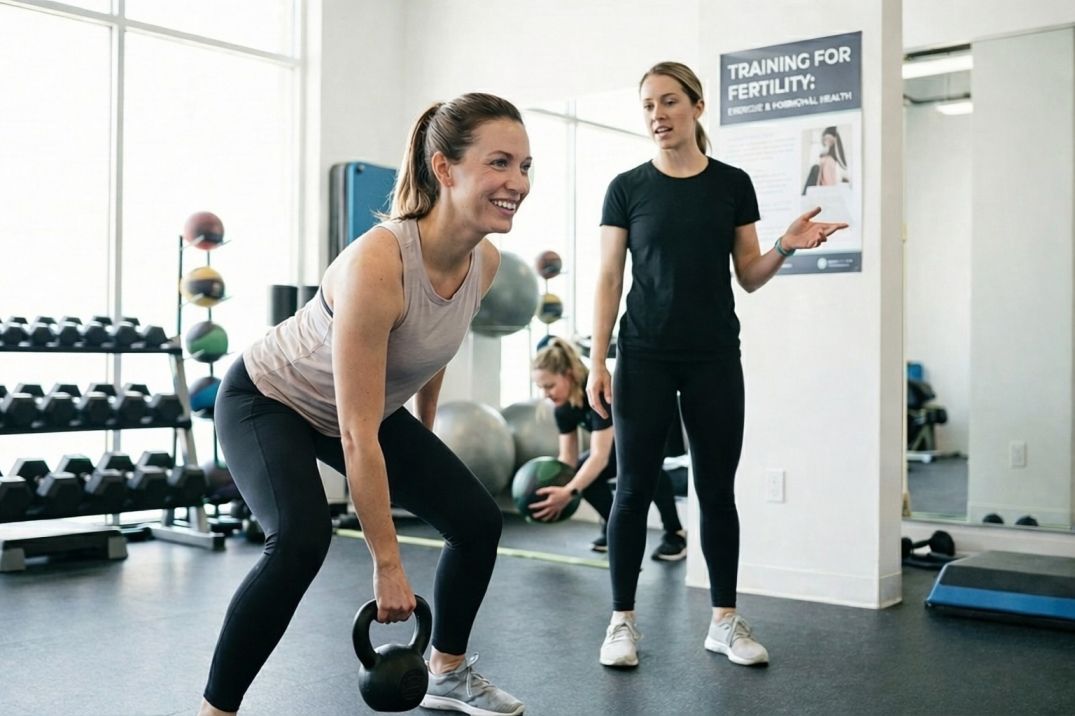
Commit to 2 to 3 sessions per week at moderate intensity to optimize your hormonal health and feel your best.
If you need a personalized approach, working with a hormone specialist can help align your training with your goals.
Low-Impact Cardio
With low-intensity cardio, you support your circulation without increasing your stress hormones excessively.
Examples include:
- Walking
- Cycling
- Swimming
Commit to 20 to 40 minutes per session, several times per week, to boost your hormone balance.
Mobility and Recovery Training
Recovery is essential for your hormone balance, while mobility work supports your nervous system and reduces physical stress.
Include:
- Stretching
- Yoga
- Breathwork
Unlock your full potential by embracing these powerful, often-overlooked fertility exercises for hormonal health.
Functional Movement
Functional exercises help improve movement efficiency, reducing physical strain so your body moves better and with less stress.
Examples:
- Squats
- Lunges
- Core stability work
These movements empower you to achieve long-term physical health and reproductive strength.
Weekly Training Structure for Hormonal Support
Here is a simple weekly plan:
| Day | Activity |
|---|---|
| Monday | Strength training |
| Tuesday | Cardio and mobility |
| Wednesday | Rest or light movement |
| Thursday | Strength training |
| Friday | Walking or yoga |
| Saturday | Light activity |
| Sunday | Full rest |
This structure supports fertility exercise for hormonal health without overloading the body.
Training With Your Menstrual Cycle
Improved results are possible when you adjust your workouts based on your cycle.
Follicular Phase
- Higher energy levels
- Ideal for strength training
Ovulation
- Peak performance
- Can handle moderate intensity
Luteal Phase
- Focus on lower intensity
- Prioritise recovery
Menstrual Phase
- Light movement only
- Walking and stretching are recommended
This approach helps you apply fertility exercises for hormonal health in a way that works with your body.
Common Mistakes That Affect Fertility
Many women unknowingly train in ways that negatively impact their hormone balance.
Overtraining
Too much exercise can increase cortisol and disrupt ovulation.
Too Much High-Intensity Training
Frequent HIIT sessions can stress the body and reduce fertility signals.
Not Eating Enough
Calorie restriction combined with exercise can impair reproductive function.
Lack of Recovery
Without rest, your body cannot regulate your hormones effectively.
Team up with a women’s health specialist to identify these issues and get your training back on track for maximum results.
Nutrition and Training Must Work Together
Exercise alone is not enough for you. Nutrition plays a key role in your hormone regulation.
Focus on:
- Protein for tissue repair and hormone production
- Healthy fats for hormone synthesis
- Carbohydrates for energy and cycle support
A well-rounded plan enhances the effects of fertility exercises on hormonal health.
Managing Stress Through Exercise
Stress is one of the biggest barriers to your hormonal balance.
Exercise can reduce your stress, but only when you manage it properly.
Signs of excessive stress from training:
- Fatigue
- Poor sleep
- Irregular cycles
- Low energy
If these occur, you need to reduce intensity and increase your recovery.
Quick Checklist for Effective Training
Use this checklist to assess your routine:
- Training 3 to 4 times per week
- Including strength and low-impact cardio
- Taking regular rest days
- Eating enough to support your activity
- Sleeping well
- Managing stress levels
If you notice several areas are missing, seize the opportunity to elevate your plan for better results.
You can explore structured support through this fertility exercise for the hormonal health service to improve your results.
Why Perth Women Need a Structured Approach
In Perth, many women maintain active lifestyles, but not all forms of exercise support fertility.
Busy schedules, work stress, and inconsistent routines can disrupt hormone balance.
Take charge: a structured plan tailored to your lifestyle empowers you to apply fertility exercise for hormonal health with lasting consistency and effectiveness.
When to Seek Professional Support
Consider professional help if you experience:
- Irregular periods
- Hormonal imbalances
- Difficulty conceiving
- Ongoing fatigue
A structured plan for sports performance coaching, adapted for women’s health, can support recovery and balance.
Building a Sustainable Routine
The most effective approach for you is to stay consistent and realistic—these habits build lasting success.
Focus on:
- Gradual progress
- Balanced intensity
- Listening to your body
Avoid extreme training programs that promise you fast results.
Conclusion
Fertility exercise for hormonal health is about supporting your body, not pushing it beyond its limits. With the right balance of strength training, cardio, recovery, and nutrition, you can improve your hormone regulation and overall reproductive health.
For women in Perth seeking expert support, MH Performance Coaching provides personalized training strategies aligned with your hormonal and fertility goals. Start your journey today. Visit our contact page or call Tel: +61 8 5122 6957 to discuss your goals and build a plan tailored to you.
With consistency, balance, and the right strategy, you can make a lasting, meaningful impact in your fertility journey—start today and move forward with confidence.