Coordination exercises involve training activities to enhance the harmonious interaction between sensory systems and motor control, improving muscle control, proprioception, and overall synchronisation. Regular coordination training increases the chance of better motor skill development, balance, and stability across all age groups, from children to older adults. According to research published in the Journal of Strength and Conditioning Research, agility training, balance exercises, and neuromuscular exercises significantly improve reaction time, agility, and overall physical training outcomes (Behm et al., 2015). Fitness trainers and medical professionals consistently recommend incorporating movement and hand-eye coordination drills to support motor development and cognitive health, making these exercises beneficial beyond sports conditioning alone.
Keep reading to understand why coordination is important for you or your family members and how to improve daily activities, sports performance, and overall health.
Table of Contents
ToggleWhat is Coordination?
Coordination is controlling and synchronising different body parts smoothly and efficiently to achieve specific movements or tasks. It involves integrating sensory input, muscle activation, and motor skills to execute precise and controlled movements. Effective coordination requires strong communication between the nervous system and muscles, enhancing motor development, balance and stability, agility, and reaction time. Common examples include hand-eye coordination drills, footwork exercises, and agility training, which rely on coordinated motor skills to perform movements accurately.
What are the Benefits of Coordination?
Coordination exercises provide measurable physical and mental health improvements for children, adults, and seniors. Scientific evidence consistently supports regular coordination training to enhance motor skills, cognitive performance, and functional independence, directly influencing daily activities and overall quality of life.
1. Physical Benefits of Coordination Training
Enhanced Motor Skills Development
Coordination exercises improve motor development through consistent practice of motor skills training and footwork exercises, which are needed during childhood growth stages.
Improved Balance and Stability
Balance and stability exercises enhance posture, core strength, and equilibrium, decreasing the likelihood of falls or injuries, particularly for seniors.
Increased Agility and Reaction Time
Regular agility training and reaction time drills accelerate response capabilities, boosting athletic performance and the ability to respond quickly during daily tasks.
Greater Physical Endurance
Consistent participation in fitness exercises like footwork exercises and sports conditioning enhances stamina and muscle resilience for more extended and more effective participation in physical activities.
2. Mental Benefits of Coordination Training
Enhanced Cognitive Function
Neuromuscular exercises actively engage the nervous and muscular systems, sharpening memory, attention, and problem-solving skills.
Improved Motor Development
Structured motor skills training, especially beneficial in children, promotes efficient motor development by strengthening neural connections.
Regular coordination training promotes sustained physical and cognitive functionality at every age. Consistent practice of targeted exercises maintains ongoing health benefits and enhances personal independence, safety, and effectiveness in performing everyday tasks, sports, and physical activities.
Why is Coordination Training Important?
- Improved Muscle Control: Neuromuscular exercises enhance muscle control by improving communication between nerves and muscles. Regular repetitions reinforce effective muscle activation patterns for accurate movements and reducing muscle strain.
- Efficient Motor Skills Development: Consistent motor skills training and movement drills promote motor development, which is important during childhood and recovery. These exercises facilitate smoother movements and better overall body control.
- Injury Prevention: Balance and stability exercises lower injury risks by improving proprioception and body awareness. According to the Australian Physiotherapy Association, individuals who regularly perform footwork exercises and agility training experience fewer falls, sprains, and other common injuries.
- Faster Reflexes and Reaction Times: Reflex training, reaction time drills, and agility training improve response times. Enhanced reflexes help individuals quickly respond to unexpected events, which is needed in sports conditioning and routine activities, such as driving or crossing roads safely.
- Enhanced Functional Independence: Practising motor skills training and hand-eye coordination drills provides prolonged independence in daily tasks, particularly among seniors. Improved motor development through targeted coordination exercises allows individuals to perform routine movements better, such as dressing, cooking, or household activities.
How to Improve Your Coordination?
Improve coordination by consistently performing targeted exercises involving agility training, motor skills training, and balance exercises. Effective coordination training requires structured repetitions and precise movements, which positively influence muscle control, reflexes, and proprioception.
What are the Principles of Coordination Exercises?
Specificity Principle
Select coordination exercises relevant to the specific motor skills or physical activities requiring improvement. For example, athletes benefit from agility training and reaction time drills, while seniors focus more on balance and stability exercises.
Progressive Overload Principle
Gradually increase exercise complexity, intensity, or repetitions over time. According to Dr Grant McKechnie from ESSA, starting with simpler movements and progressively advancing difficulty helps the body adapt effectively and reduces injury risk.
Consistency and Regularity Principle
Coordination improves significantly when exercises such as footwork drills, hand-eye coordination drills, and balance exercises are performed consistently and regularly. Irregular training disrupts motor development and limits improvement.
Variety Principle
Regularly introduce different coordination exercises, including agility training, neuromuscular exercises, and reaction time drills, to challenge various muscle groups and prevent training plateaus. Varied exercises stimulate broader neuromuscular adaptations and enhance reflex training efficiency.
What are Common Examples of Coordination Exercises for Kids?
Skipping and Jump Rope Activities
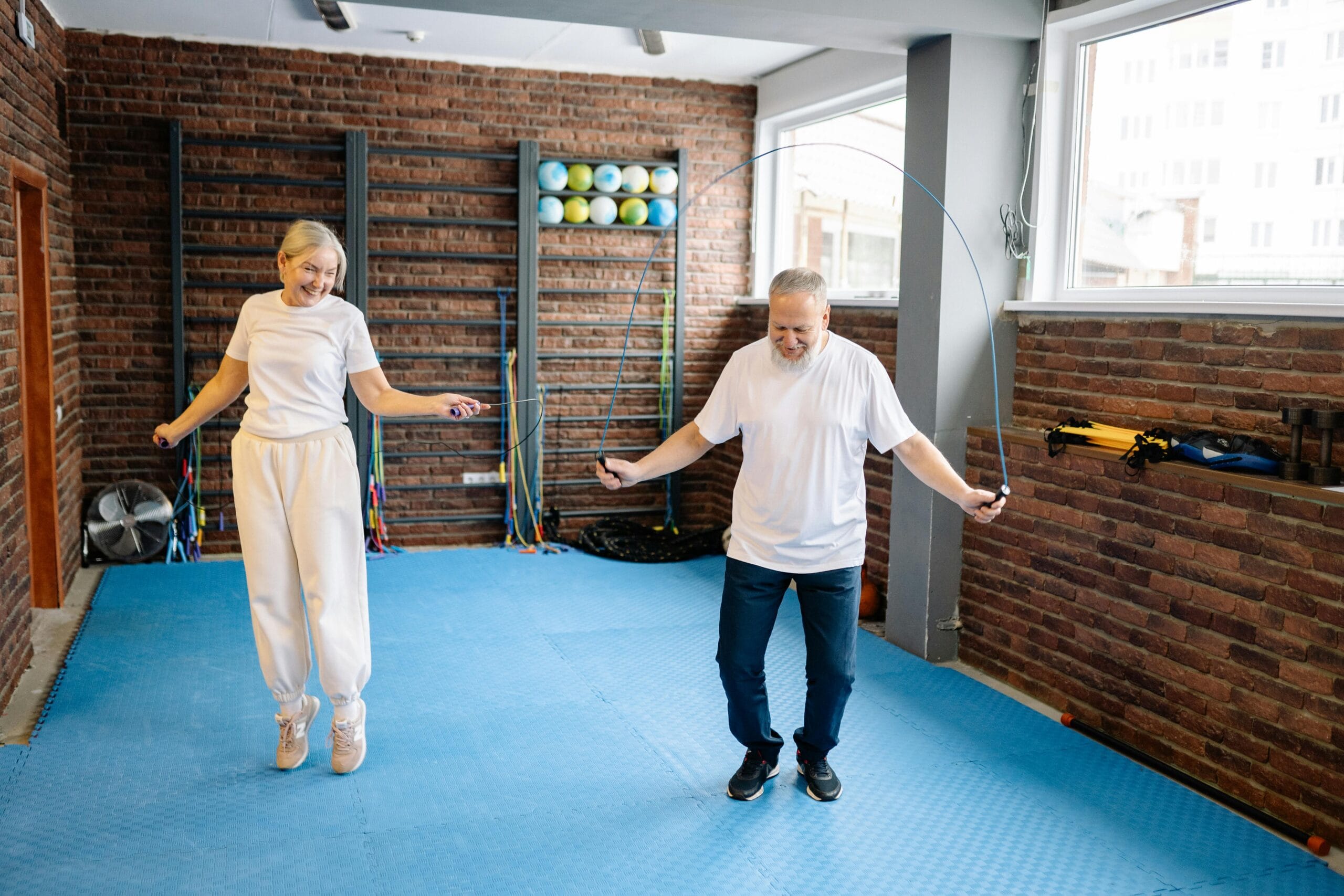
Skipping enhances footwork skills, rhythm, balance, and agility, benefiting children’s gross motor coordination and cardiovascular health.
Ball Catching and Throwing Drills
Hand-eye coordination drills like catching or throwing balls enhance children’s synchronisation, reflexes, and precise muscle control, crucial for sports participation and daily tasks.
Balance Beam Exercises
Balance and stability exercises on balance beams help children develop proprioception, coordination, and body awareness, significantly reducing the risks of accidental falls.
Hopscotch
Hopscotch encourages agility, footwork, and muscle control, promoting sequential motor development through repetitive movements and precise spatial awareness.
Obstacle Courses
Movement drills in obstacle courses promote agility, muscle control, and gross motor skills by integrating various physical training elements, such as jumping, crawling, and running.
What are Common Examples of Coordination Exercises for Adults?
Ladder Drills
Footwork exercises using agility ladders improve adults’ speed, agility, and coordination, which is beneficial for sports conditioning and daily movements.
Ball Tossing and Catching
Hand-eye coordination drills involving catching or throwing improve synchronisation and reflexes, contributing positively to everyday precision tasks like driving.
Yoga and Pilates
Balance and stability exercises in yoga or Pilates classes develop core strength, enhance balance, and significantly decrease injury risk by improving proprioception and body control.
Circuit Training
Incorporating neuromuscular exercises and motor skills training within circuit workouts challenges muscle control and coordination, improving overall motor development.
Dance Classes
Dance-based movements enhance synchronisation, rhythm, and agility through repetitive movements, benefiting coordination and cognitive functions simultaneously.
What are Common Examples of Coordination Exercises for Seniors?
Tai Chi
Tai Chi combines balance exercises and gentle movements, improving proprioception, reducing falls, and enhancing seniors’ overall muscle control.
Single-Leg Balance Exercises
Balance and stability exercises performed on one leg strengthen stabilising muscles, directly reducing fall risk by up to 34%, as reported by AIHW (2023).
Ball Throwing and Catching
Hand-eye coordination drills such as throwing and catching balls help maintain and enhance motor skills, reflexes, and daily functional tasks among seniors.
Chair-Based Exercises
Chair-based fitness exercises, including seated marching or arm raises, improve coordination, balance, and muscle strength safely and are particularly suitable for older adults with limited mobility.
Reaction Ball Drills
Reaction time drills using reaction balls challenge reflexes and responsiveness, aiding seniors in maintaining their agility and quickness in daily movements.
How to Program Coordination Exercises Into Your Routine?
Program coordination exercises into routines effectively by following five essential guidelines. Fitness Australia recommends structured inclusion of agility training, balance exercises, and motor skills training to improve coordination and motor development consistently.
- Schedule Exercises Regularly: Perform balance and stability exercises or footwork drills at least 2-3 times weekly. Consistent physical training sessions lead to significant and measurable improvement in coordination skills.
- Begin with Simpler Movements: Start sessions with simpler motor skills training or hand-eye coordination drills. Gradually progress to more complex agility training as muscle control and proprioception proficiency improve.
- Incorporate Repetitions and Sets: Include structured repetitions (10-15 per set) of reaction time drills or neuromuscular exercises. Defined repetitions offer effective motor skill retention and muscle memory development.
- Add Variety to Exercises: Regularly change exercises or introduce new movement drills. Different coordination exercises, including agility ladders, reflex training, or hand-eye coordination drills, prevent plateauing and continuously stimulate neuromuscular adaptability.
- Align Exercises with Goals: Choose exercises relevant to individual health, fitness, or sports conditioning goals. Seniors benefit most from balance exercises like Tai Chi, adults from agility training, and children from motor development activities like skipping.
Why Choose Us for Health & Fitness Coaching in Myaree & Wangara?
Choose MH Performance Coaching for comprehensive health and fitness coaching in Myaree and Wangara, specialising in strength, coordination, agility training, and motor skills training. Trainers deliver individualised programs backed by evidence-based exercise science, offering measurable fitness, muscle control, and physical health improvements for adults, children, and seniors across Perth, Western Australia.
Are coordination exercises suitable for all ages?
Yes, coordination exercises are suitable for all ages. Trainers and health professionals recommend coordination training, including motor skills training, agility training, and balance exercises, as these enhance motor control, proprioception, and physical health from childhood through to senior years.
Does practising coordination exercises reduce the risk of falls?
Yes, practising coordination exercises reduce the risk of falls. Balance and stability exercises, proprioception drills, and neuromuscular exercises significantly decrease fall incidents, particularly among seniors, with studies indicating up to a 34% reduction in fall rates (Australian Institute of Health and Welfare, 2023).
Is it true that coordination exercises only benefit athletes?
No, it is not true that coordination exercises only benefit athletes. Coordination training benefits all individuals by enhancing everyday functional movements, muscle control, reflexes, and proprioception, making daily tasks safer and more efficient, regardless of age or athletic capability.
Can coordination exercises help with sports performance?
Yes, coordination exercises can help with sports performance. Regular agility training, hand-eye coordination drills, and reaction time drills improve motor skills, reflexes, and muscle synchronisation, directly enhancing athletes’ performance, precision, and responsiveness during sports activities (Sports Medicine Australia, 2023).